

Processing Notes
Location: Riet Vell
Author: Angèlica Busquets Rubiés
Date: 2026-07
Processed period: 2025-09-04 (247) to 2025-12-31 (365)
Code: L0, L1, L2
DOYs we went to the field: 4/9/25 (247), 17/09/25 (260), 2/10/25 (275), 16/10/25 (289), 30/10/25 (303), 19/11/25 (323), 2/12/25 (336), 24/12/25 (368).
Raw to Mat
There is sometimes an error that says ‘access denied’. In the past this happened if someone was accessing simultaneously to NAS. Qin was using NAS the same day, so I believe it was because of that. Restarting the script solved this issue.
Level L0
Some filtering is carried out in this step:
xmin = [8 100 -20 -20 -10 -5 0.03 -10 99];
xmax = [50 2000 20 20 10 50 0.6 50 105];
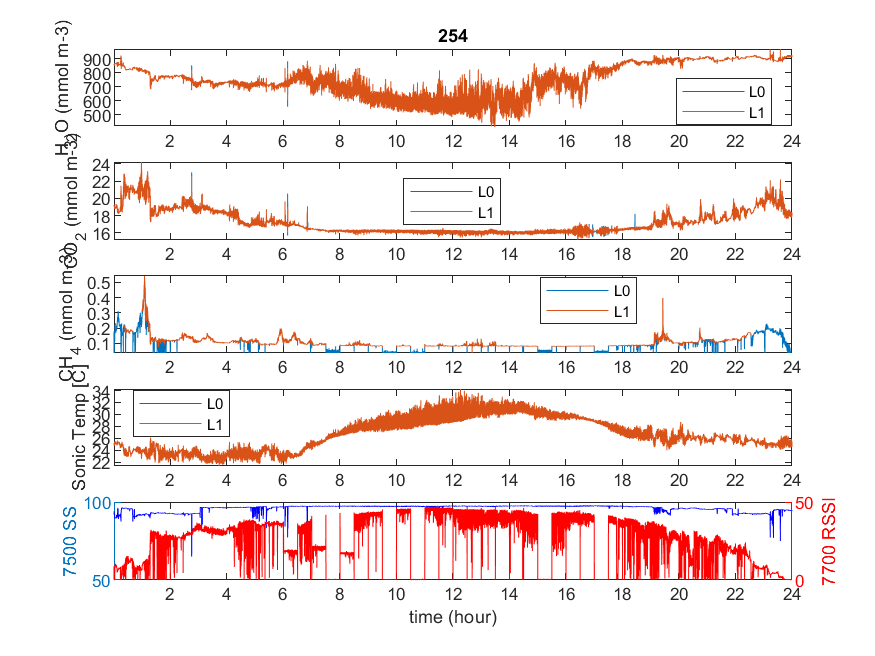
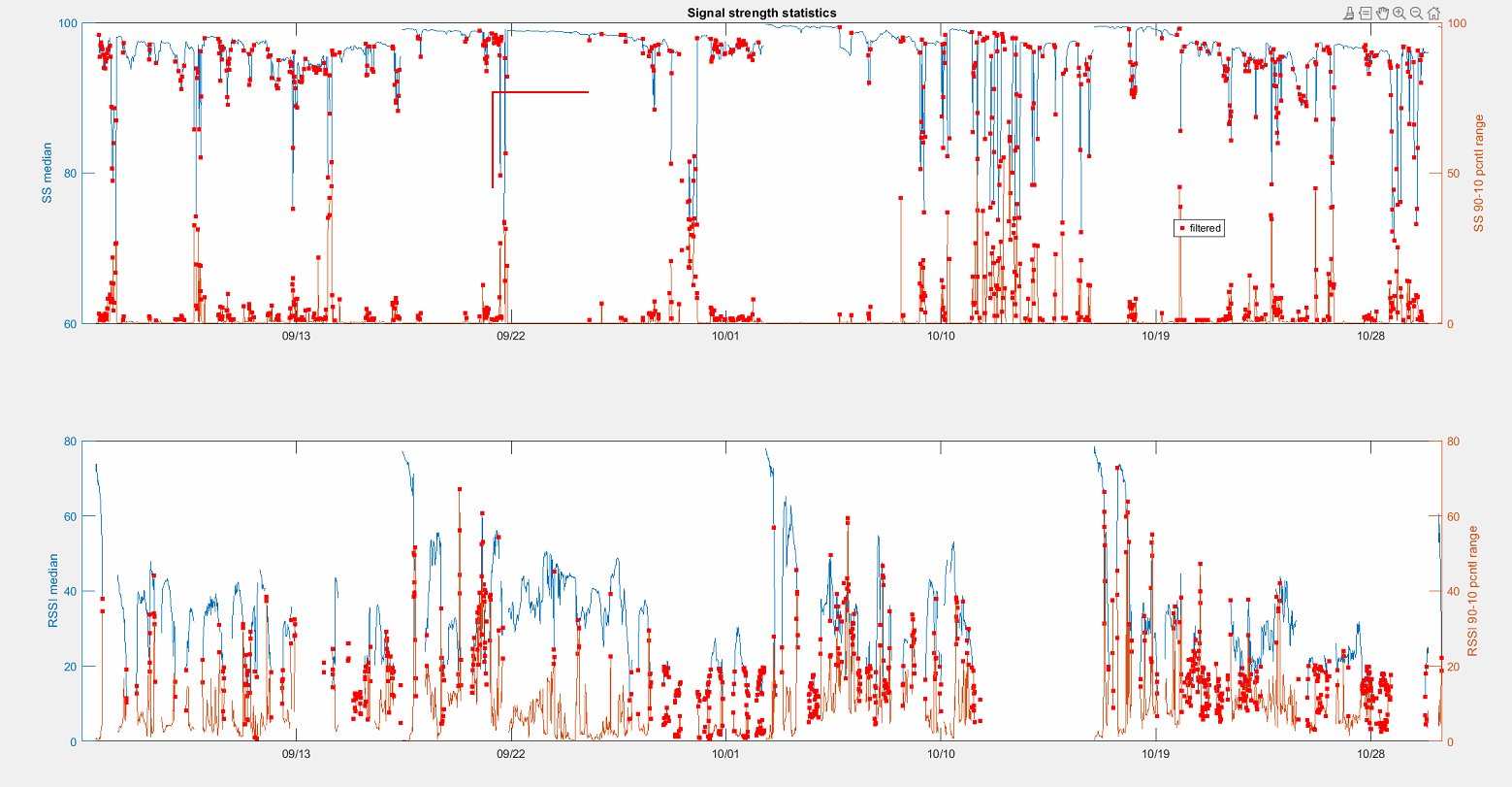
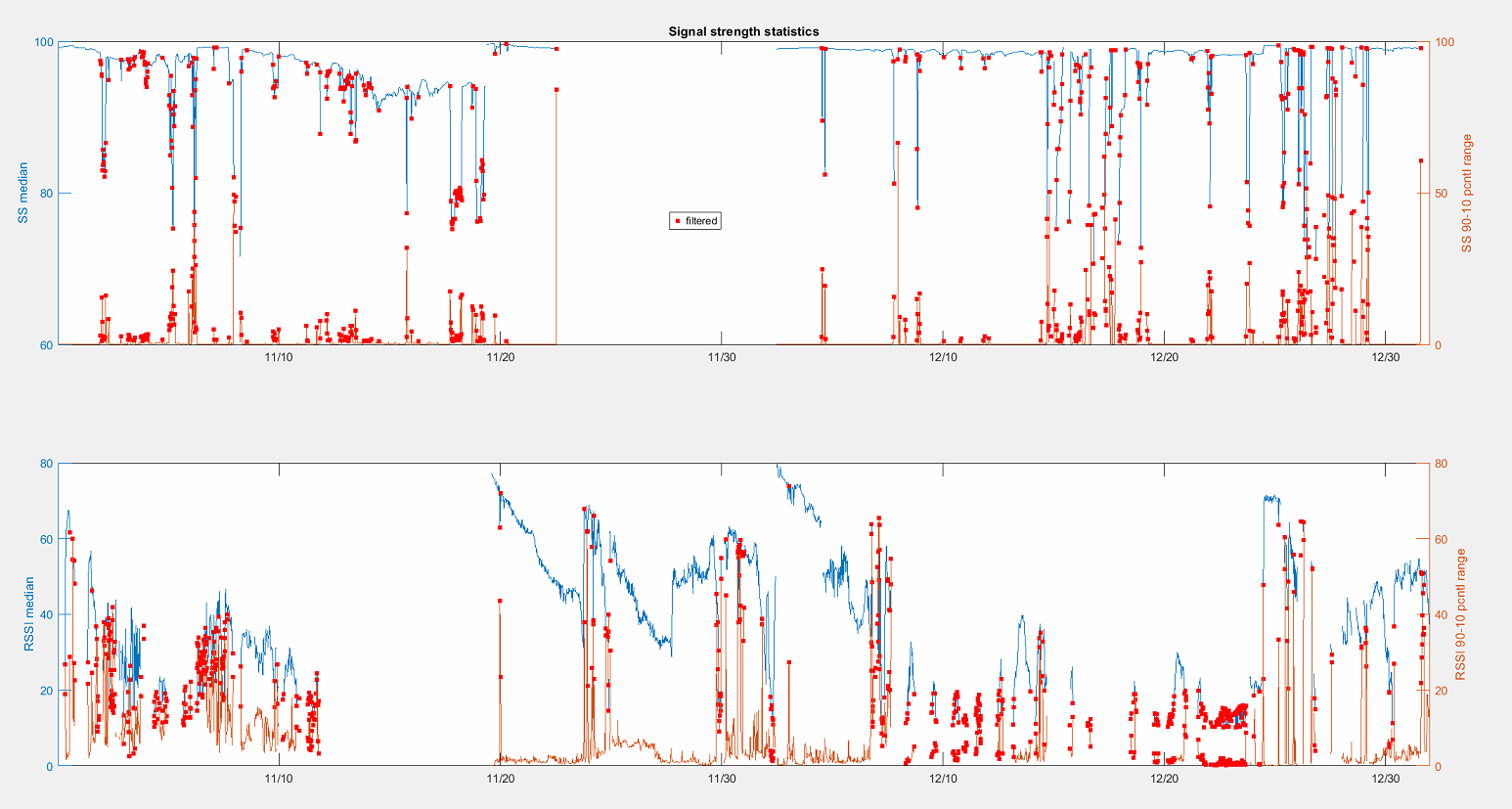
There are many periods with very low RSSI, which filters out CH4 concentrations. Some examples: 285-289, 316-323, 349, 350, 351, 360, 361.

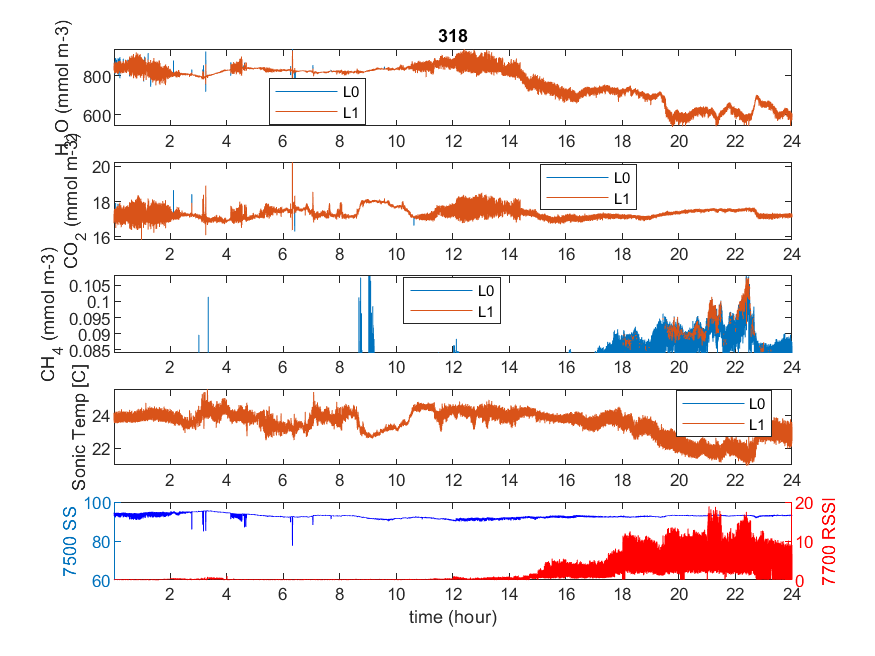
Some of these days can be explained with rain. For example:


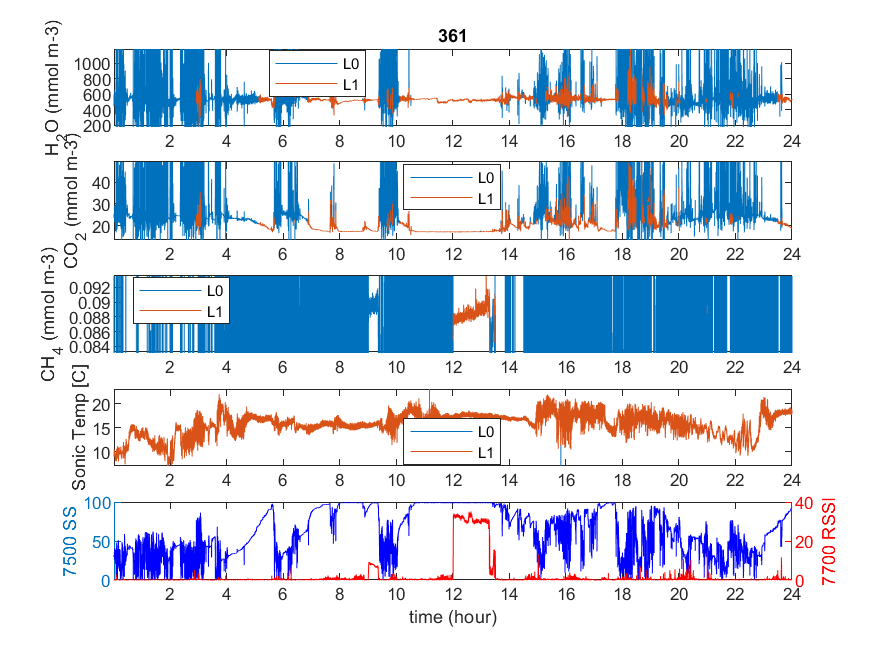
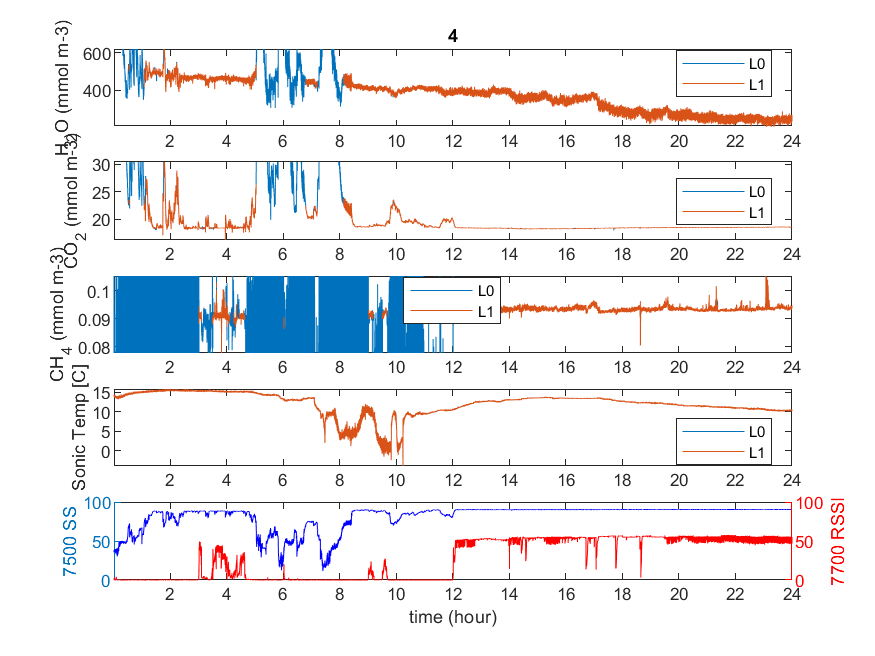
There are also a couple of days where RSSI is 0 and CH4 concentrations are directly NaN (-9999). On doy 323: we tried to synchronize both gas sensors clocks, by putting li7700 clock in automatic, wait for a moment, and slave again. However, this did not work, and a warning flag appeared in smartflux system, saying that there was a clock synchronization issue with li7700 (…) Finally, we rebooted smartflux again, and finally there was no message regarding clock’s synchronization.


During some days, RSSI is highly variable. It could be because of a clock sync issue, but it also happened just a couple of days after going to the field and synching the clocks. Plus, we should have already fixed this issue.
260: The IP addresses of Li7500 and Li7700 were not on automatic, although last time (247) Ariane set them to automatic. We set the option of automatic and later rebooted, in hope that this time it stays like this.
323: finally, there was no message regarding clock’s synchronization.
Examples:


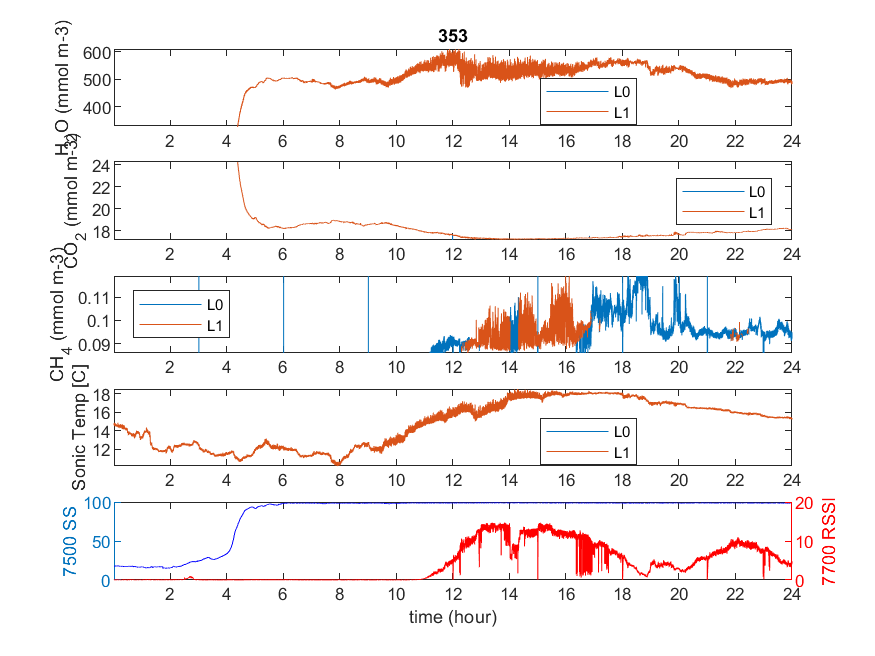
Often RSSI is very low during the night, and around 8h it suddenly rises. We hypothesize that it may be either condensation (we could turn on the heater, but it is weird that it also happens during summer), or an animal that during the night it sleeps in the lenses. There are many nights without data. Examples:


In some cases, it also happens to CO2 SS:
On some occasions there is a 30-min pattern in RSSI. It doesn’t seem to be from the auto-cleaning system. Could it be related to the 30min saving files?
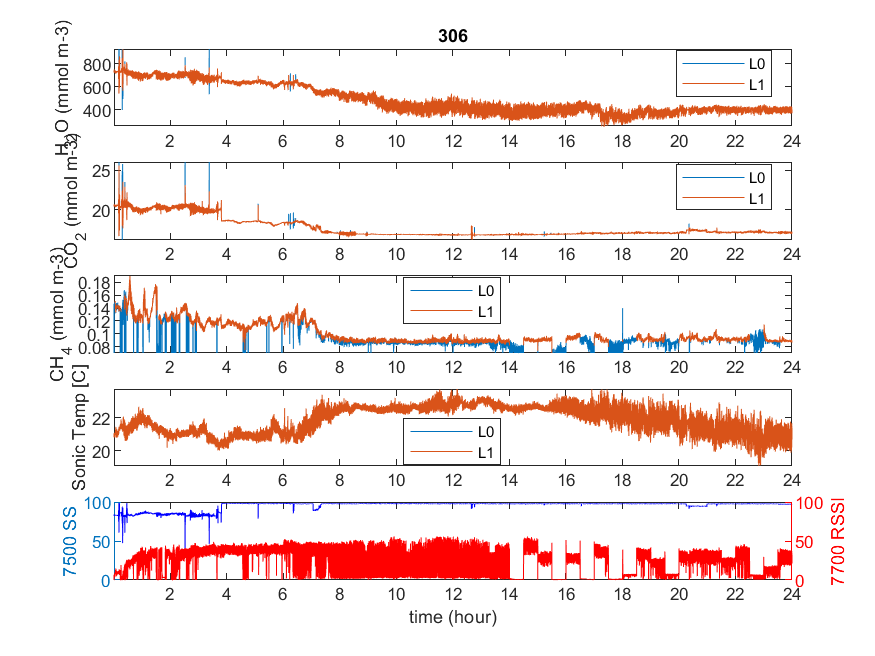
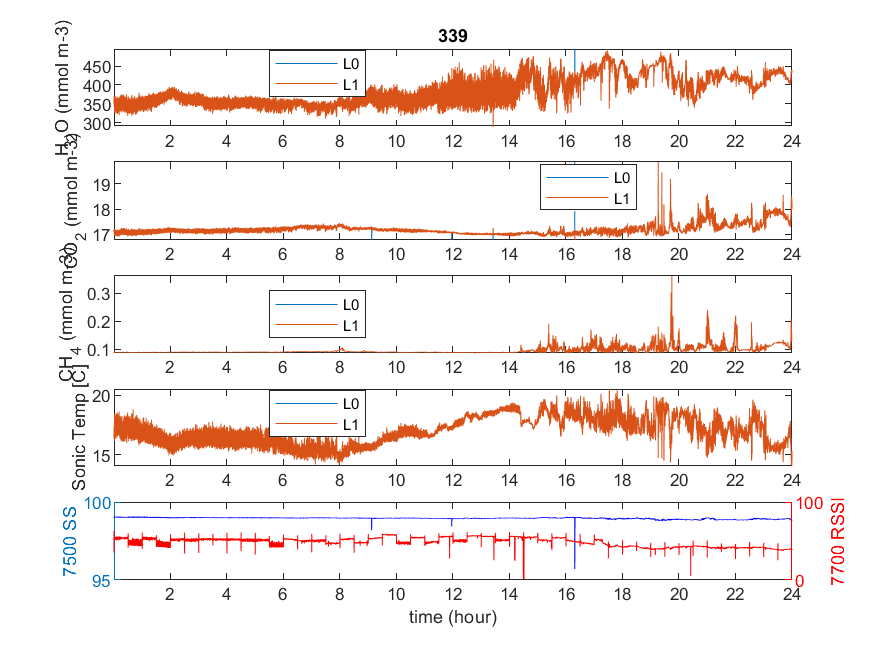
There is also a 3-hour pattern in CH4 concentration that might be related to the cleaning ch4.

On DOY 303 data is lost for a few hours. We went to the field that day, from 9.35-11.25h, so it is very weird that the data re-started later in the evening.

In DOY 326, CO2 SS suddenly lowers to 20%. Consequently, there is no CO2 data until 336. 10 days gap. We went to the field the 336 and realized the CO2 had low signal strength because of bird poop in the lower lens.


Similarly, in DOY 365, CO2 SS lowers again suddenly, and until DOY 4 2026 there is no CO2 data. In this case, the 4th of January we did not go to the field, so we are unsure of the reason behind SS behavior (maybe rain from night 3-4 cleaned the lens).

Level 1 and 2:
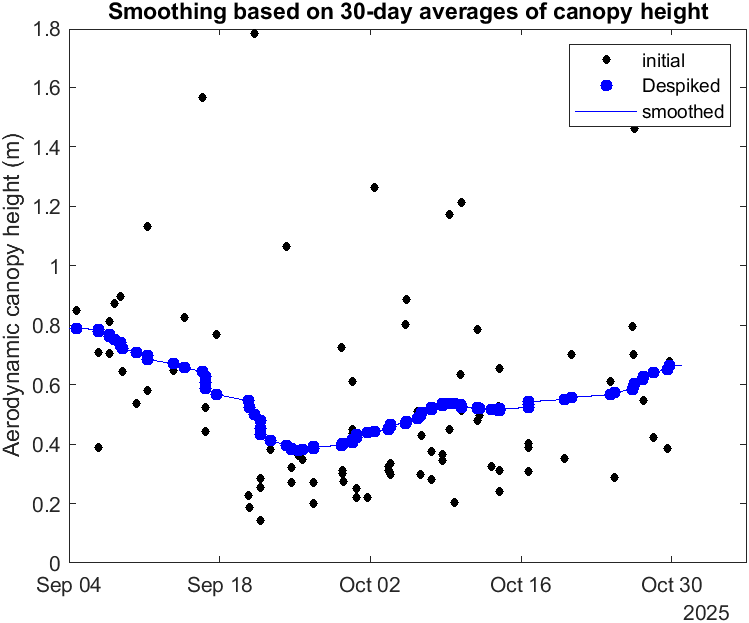
We run the code in two different periods, since vegetation height varies over the months.
Reported vegetation heights:
Periods:
Period 1 (248-303)
We set a ustar minimum of 0.1 m/s.

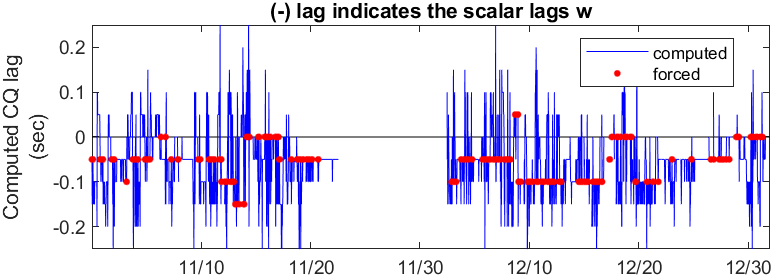
Lags: Using the GetLag function and CalculateLags script, I have checked the points that W lags Q and later got the lag in seconds à Max of 2 points (0.1s). So, for ‘lag_cq_range’ and ‘lag_m_range’ I put +-0.3s.
Heat fluxes. From the end of September LE starts to be larger than H. Looking at the pictures, the file was still a bit flooded.

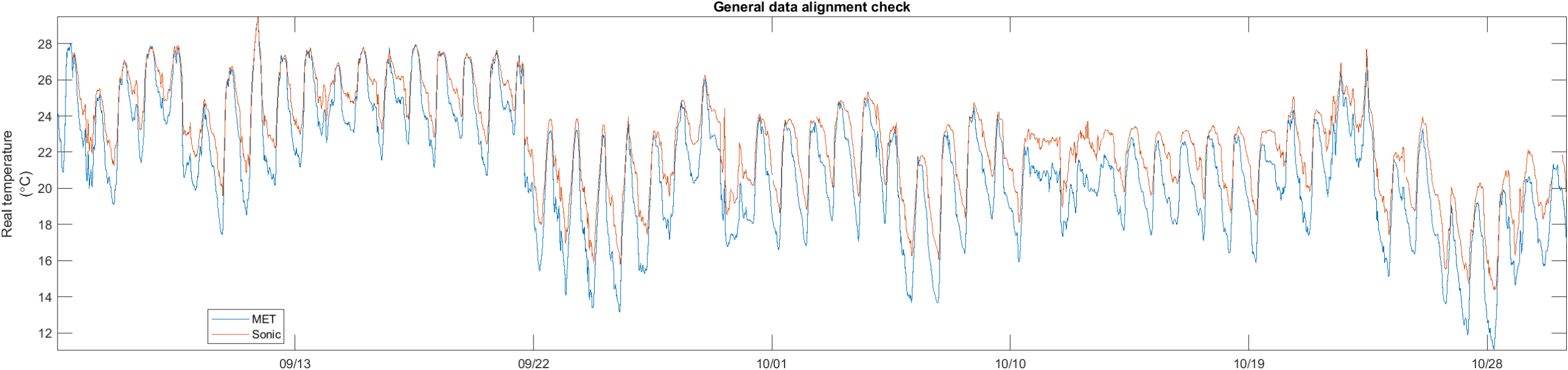
Temperature and relative humidity are quite similar between flux and met. For temperature, met reaches lower minimums:

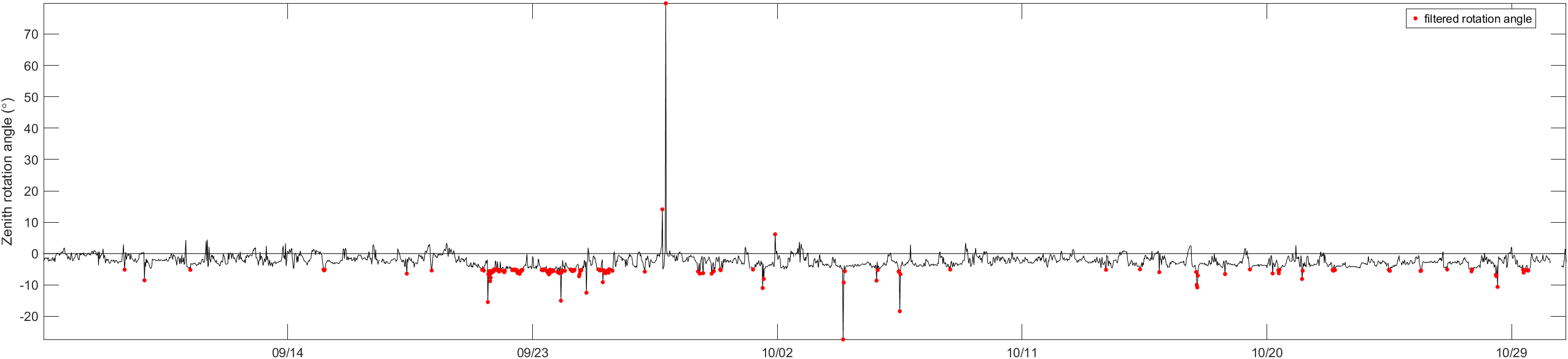
28th of September (271) there is a peak in zenith angle rotation. That day we did not go to the field. The peak is filtered. 2nd of October we went to the field and tightened anemometer’s screws, to make it straighter.
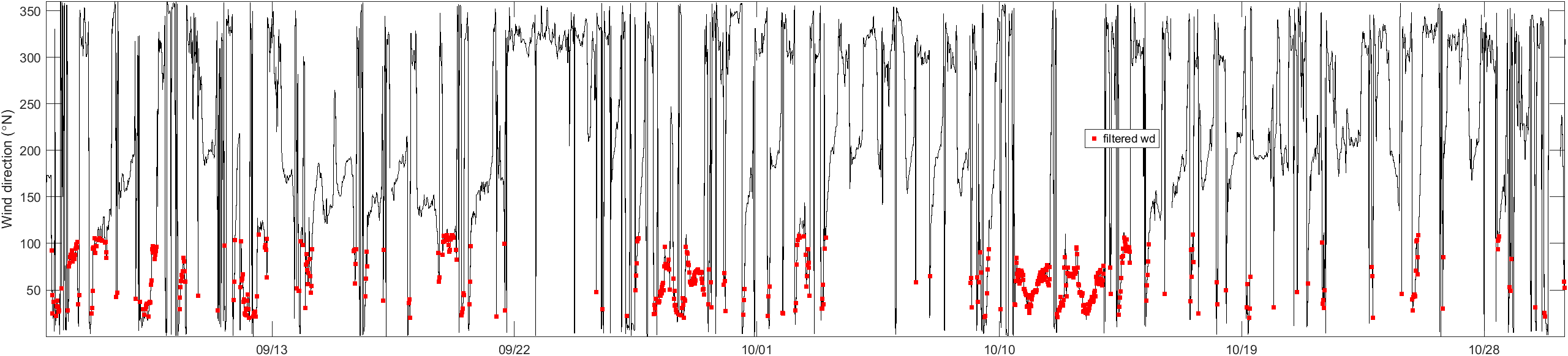
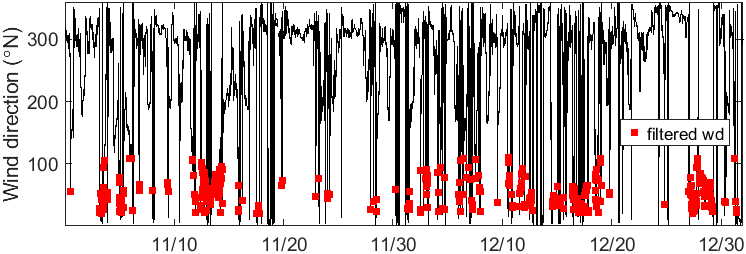
For all periods, a wind filter (no angles from 20 to 110) is set, to discard data from the contiguous field.
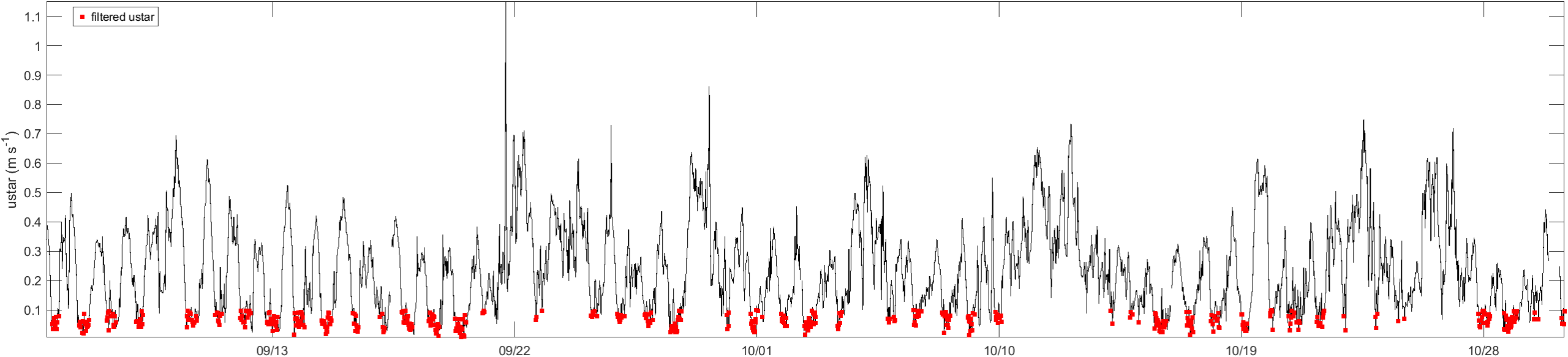

Filtered fluxes. There are quite a lot of gaps for L2.



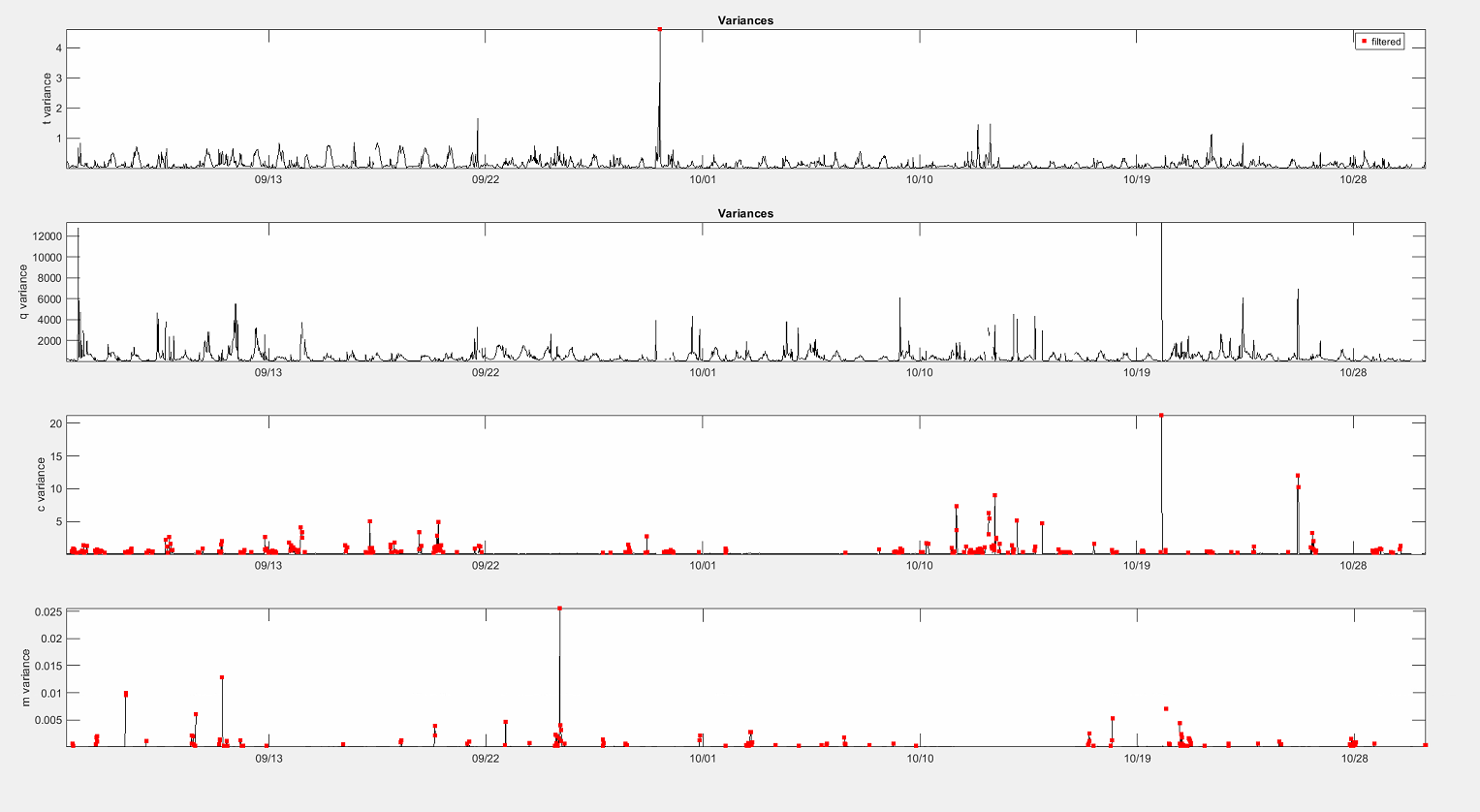
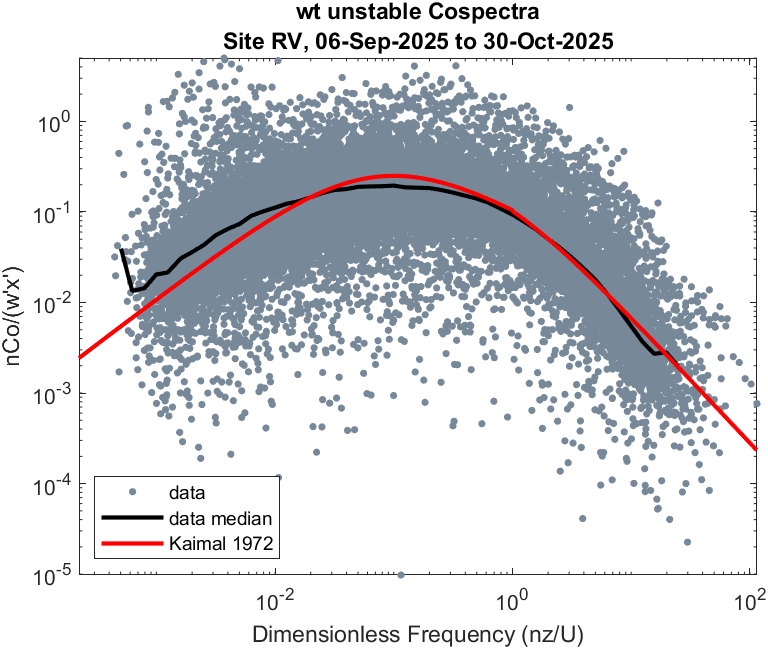
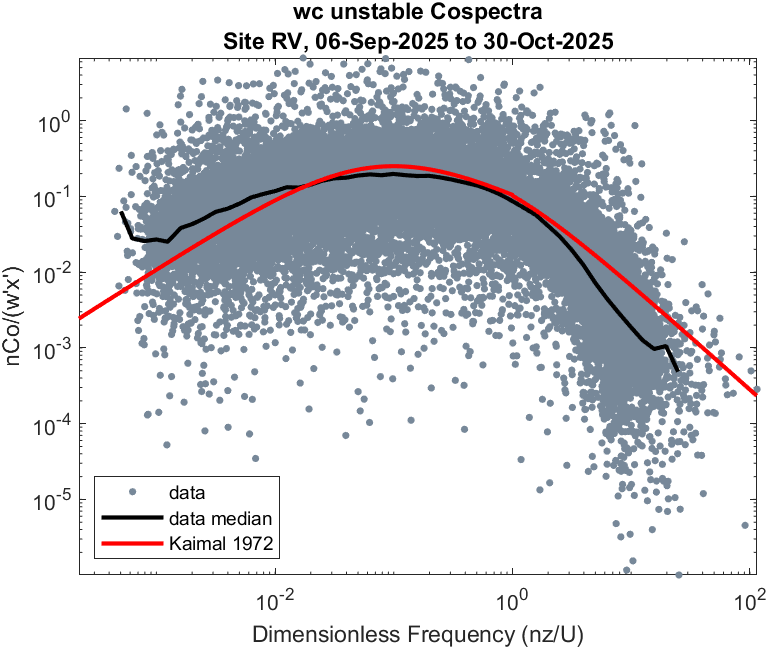
Cospectra, lower frequencies seem to be overestimated, and higher frequencies underestimated (except for wt):


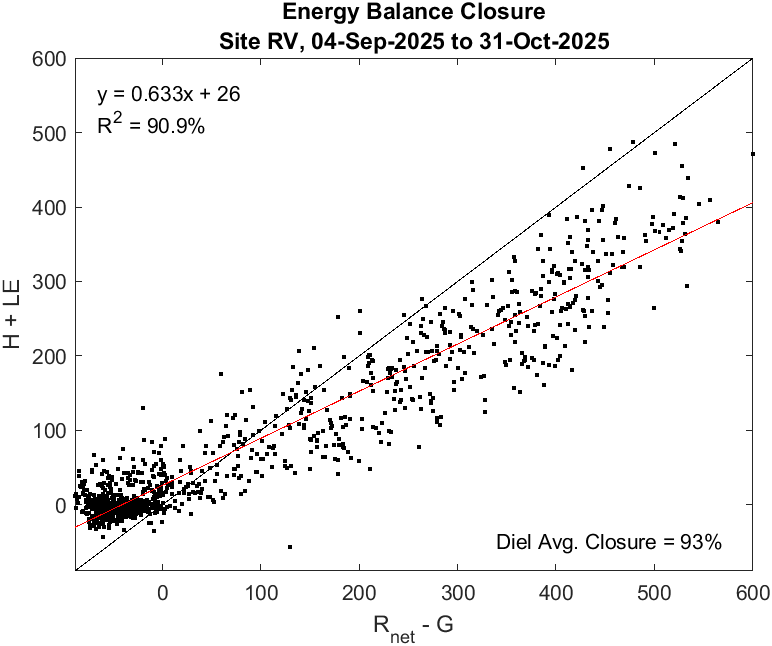

Period 2 (304-365)
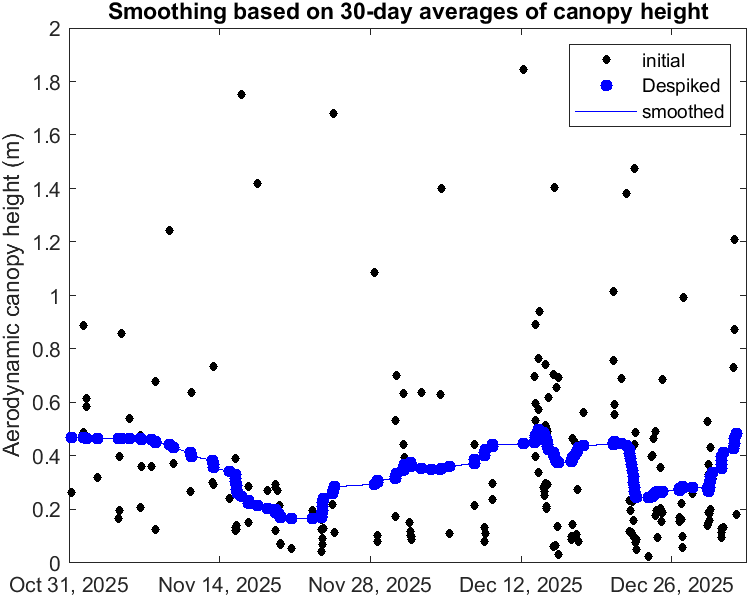
For canopy height, we see it is not 0, although we know there was almost no vegetation, and it was muddy.


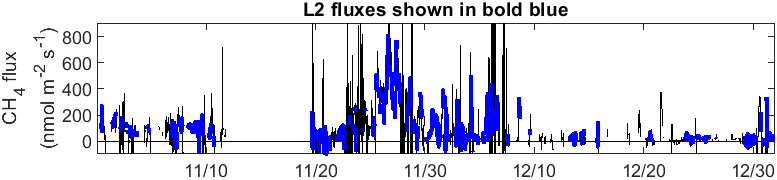
There are some flux gaps, which we already noticed before in L0.
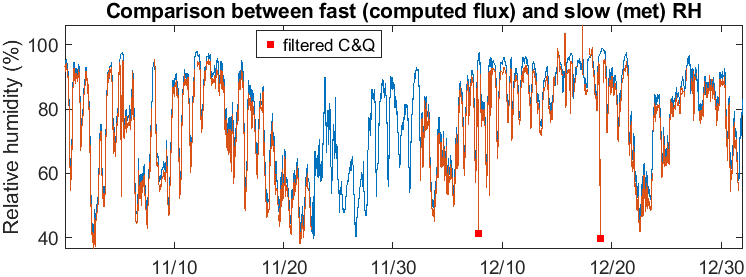
As before, met reaches lower temperatures and sonic higher ones, but peaks are the same.

Zenith angle should be closer to 0, there are many filtered values. The 19th of November (323) we cleaned the sonic anemometer because it had lots of bird poop. Maybe we put too much pressure and tilted the sensor, but the high tilt was already happening some days before that.


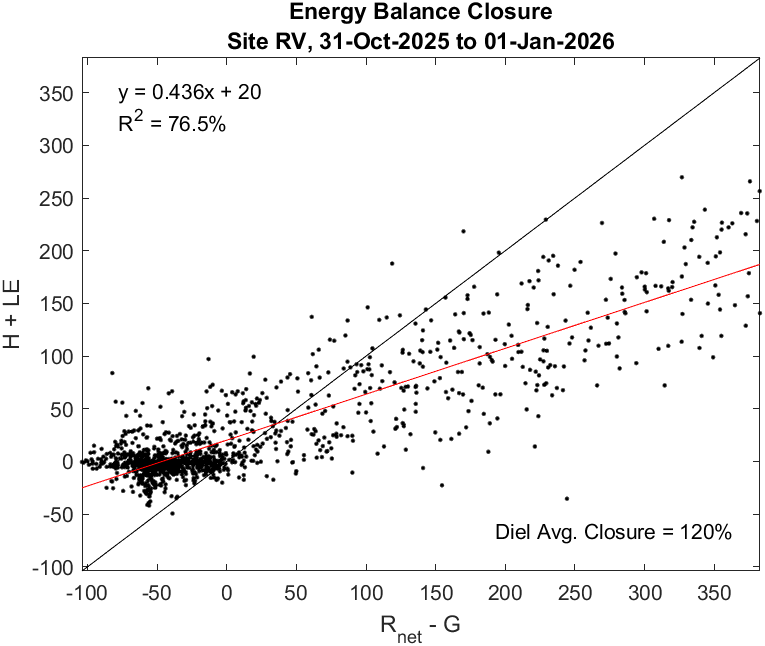
We do not use ustar filter. EBC is quite low:

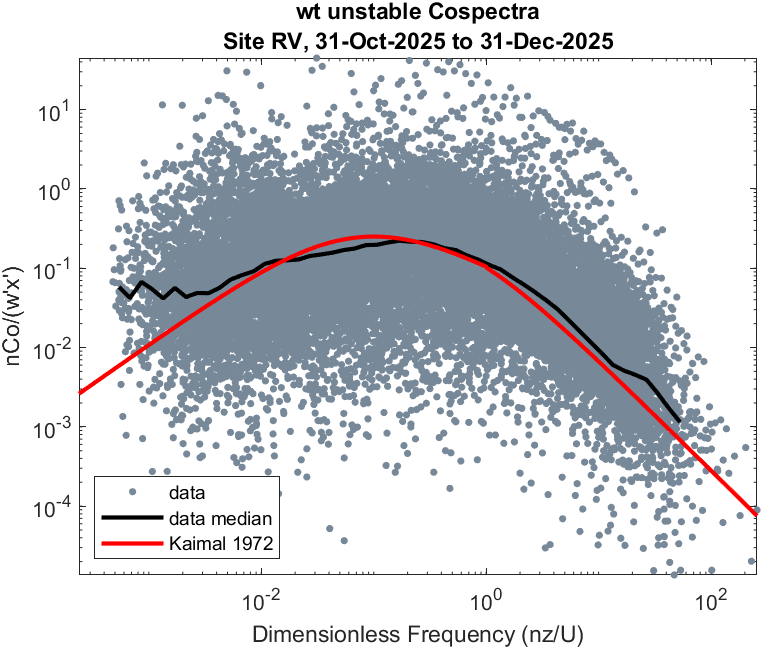
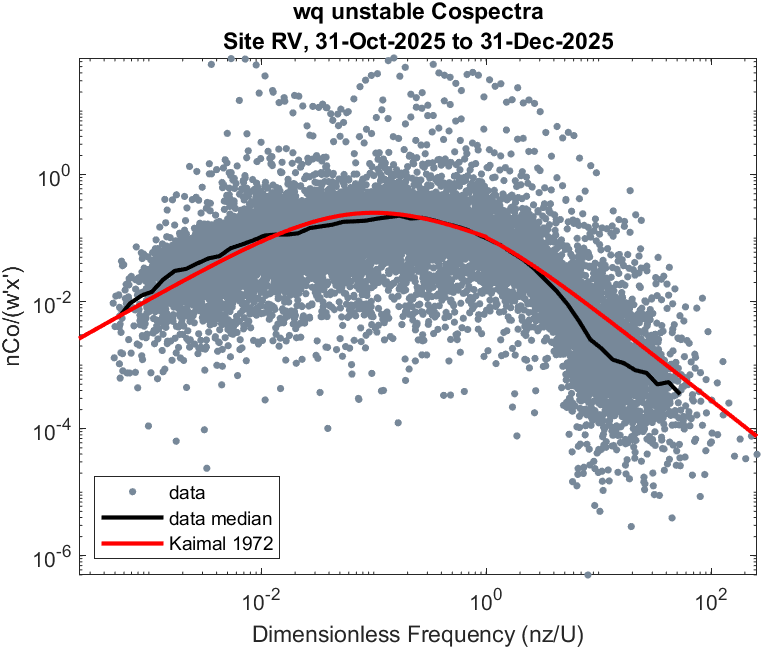
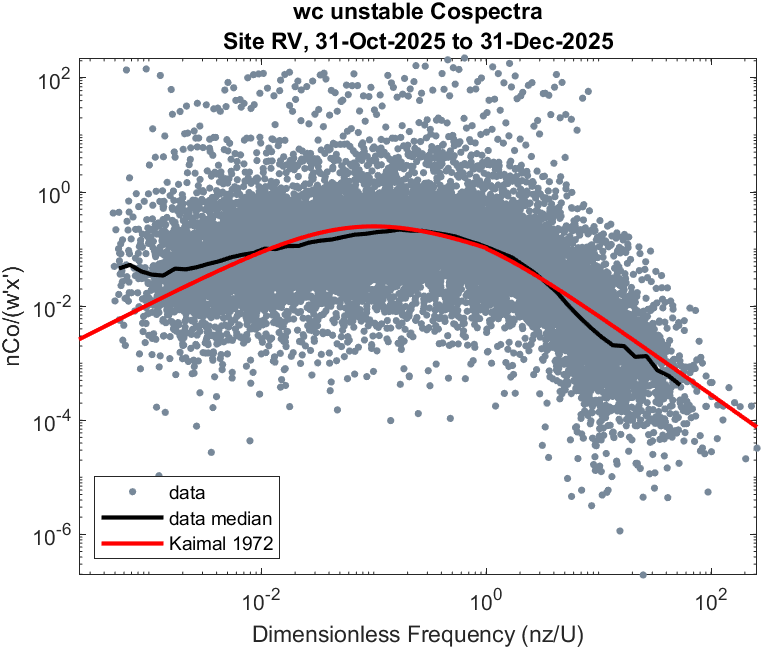
Cospectra: lower frequencies seem to be overestimated (except for wq), and higher frequencies underestimated (except for wt):

Still needs to be checked
Footprint
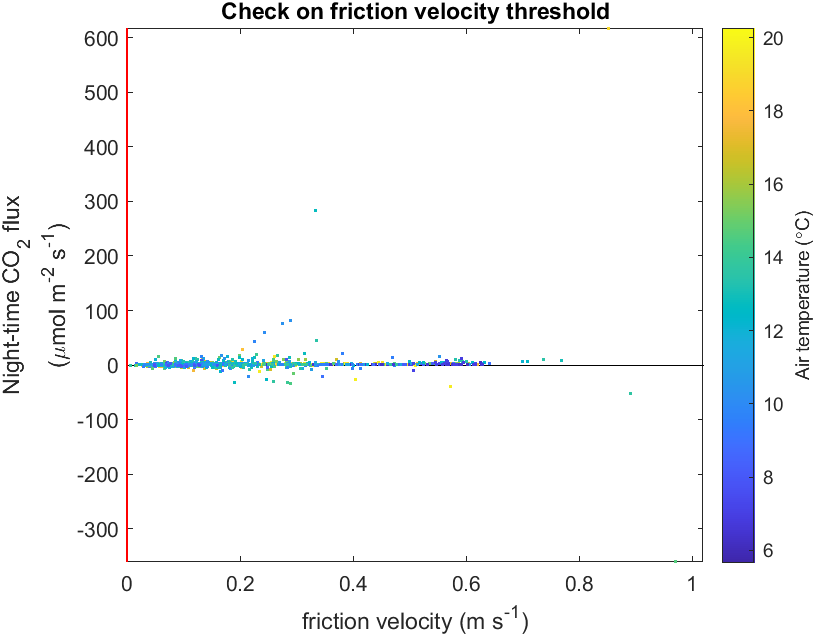
W’ss’ and nighttime CO2 fluxes correlation.
L3:
For this step, I directly run the period 247 from 2025 until 181 from 2026. The notes from this are found in the Processing Notes Flux 20260630.